Showing posts with label science. Show all posts

Thursday, February 11, 2016

Why Are Things Cute?


One of the main reasons people go online besides for social networking and adult entertainment is definitely to watch all things cute. Viewers just can’t get enough.  even has 24/7 puppy cam that is more popular than you’d expect. 


But that got popular scientist VSauce thinking, “Why are things cute?” It’s a good question. Are we instinctually programmed to think baby faces are cute? Or have babies evolved into what we perceive as cute? Essentially, it’s the ‘chicken or the egg’ conundrum, and VSauce is determined figure it out. 


Read more: http://www.viralviralvideos.com/2012/10/15/why-are-things-cute/


Why Are Things Cute?

Educational, Nerd., science, vsauce

Saturday, January 23, 2016

Men Explain The Penis


We’re sorry, the vas deferens is… what? Video available at: http://www.youtube.com/v/wL1NwfShC5w. youtube.com

Read more: http://buzzfeed.com/hillarylevine/men-explain-the-penis


Men Explain The Penis

anatomy, biology, boner, circumcision, Class., comedy, erection, female, gender, health, male, medical model, men, penis, privates, school., science, sex ed, sex education, vas deferens, women

Tuesday, January 19, 2016

How Fast Is A Bat Out Of Hell? 19 Speed Cliches, Measured Scientifically


Make it snappy like wildfire.

1. “Bat out of hell” = 3-8 meters per second.


View this image ›


Flickr: andy_bernay-roman / Creative Commons

Based on the recorded flight speeds of bats. It’s slower than Usain Bolt, but that depends on the severity of Hellfire.


2. “Blink of an eye” = 100-400 milliseconds.


View this image ›


Flickr: jonathancohen / Creative Commons

The time it takes for you to touch your eyelids together is not faster than blink of an eye, incidentally.


3. “Like a speeding bullet” = 1200 meters per second.


View this image ›


Flickr: nebarnix / Creative Commons

Based on the average speed of a bullet coming out of a high-powered rifle. This is basically the speed of Superman.


4. “Lightning fast” = 60 miles per second.


View this image ›


Flickr: wardmedia / Creative Commons

Based on the time it takes for lightning to hit the ground from the clouds. It’s faster when greased.


5. “In a jiffy” = approximately one nanosecond.


View this image ›


lofilolo

About a “light-foot,” or the time it takes for light to travel 12 inches.


6. “Flash in the pan” = 2.8 meters per second.


View this image ›


Flickr: tonyjcase / Creative Commons

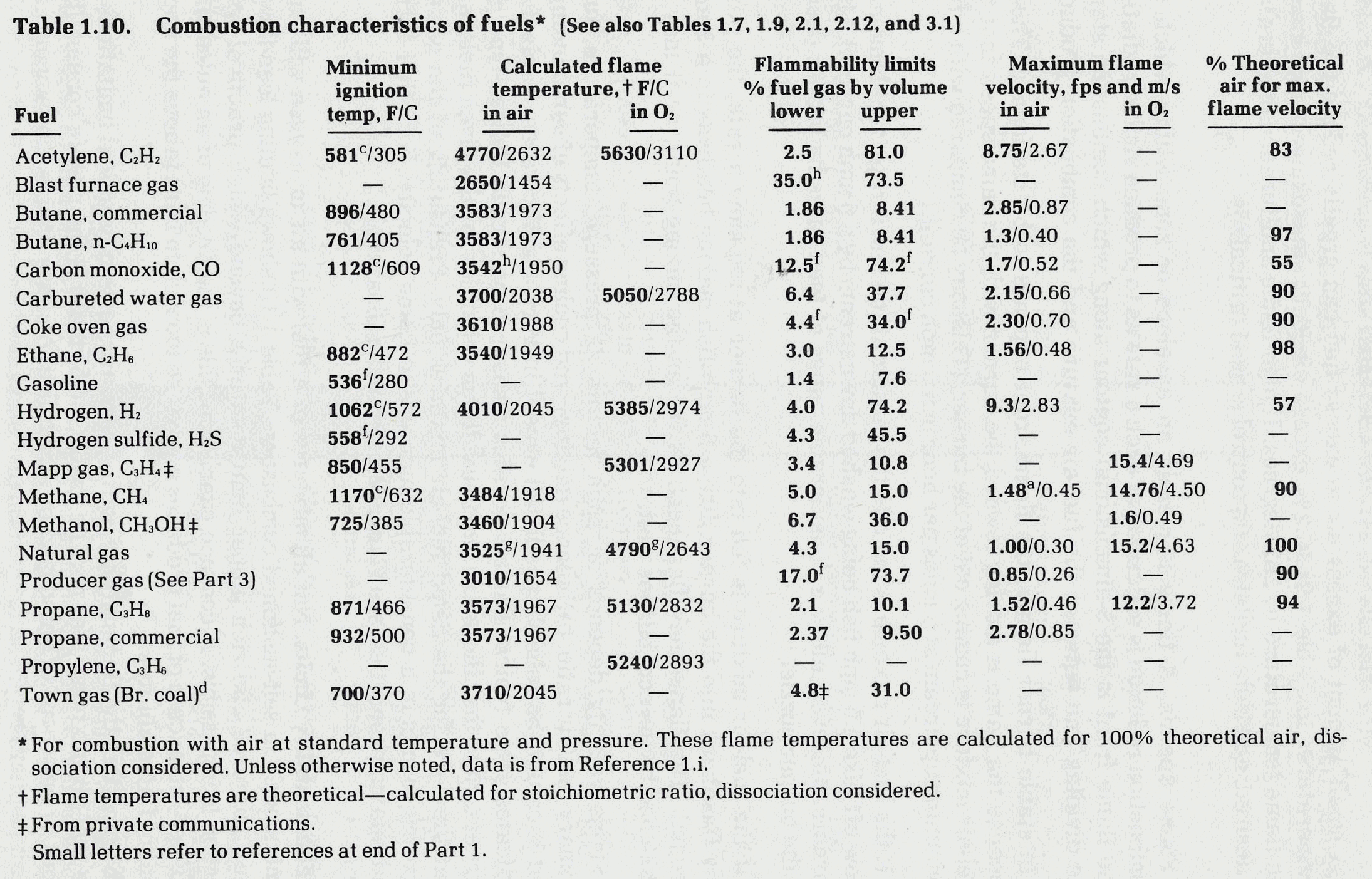
Based on the flame velocity of commercial propane, because we are cooking with gas now.


7. “Get into high gear” = 50 milliseconds.


View this image ›


Flickr: braintoad / Creative Commons

The time it takes the supercar Lamborghini Aventador to shift gears, in which a neuron could fire only 50 times.


8. “In a flash” = 186,000 miles per second.


View this image ›


Superman #709 / Via dc.wikia.com

The speed of light, or fast enough to actually perceive the present.


9. “Split-second” = half of a second.


View this image ›


Flickr: 23460066@N06 / Creative Commons

(Duh.)


10. “Drop of a hat” = 0.5 seconds.


View this image ›


Jamie Squire / Getty Images

Hat dropped from shoulder height using free fall equations and Earth’s gravity. This also happens to be a split-second.


11. “Before you know it” = 5 milliseconds.


View this image ›


Flickr: birthintobeing / Creative Commons

Based on how quickly brain neurons fire.


12. “Like wildfire” = 14 miles per hour.


View this image ›


Flickr: vissago / Creative Commons

Based on how fast a wildfire can move through an area, depending on wind and other factors. You could run faster than this.


13. “Make it snappy” = 15-20 miles per hour.


View this image ›


Flickr: phunk / Creative Commons

Based on slow-motion video of people snapping their fingers. Considering the speeds, you could make it snappy like wildfire.


14. “Pedal to the metal” = 14.5 seconds.


View this image ›


IvanMikhaylov

Based on the time for fastest road car to go from 0 to 200 miles per hour.


15. “Snail’s pace” = 0.0028 meters per second.


View this image ›


Flickr: photo_munki / Creative Commons

Based on the speed of a dang fast garden snail.


16. “Glacial pace” = 30 meters per day.


View this image ›


NASA/GSFC/Jefferson Beck / Via Flickr: gsfc

Based on the speed of the fastest glacier—the Jakobshavn Glacier. This is slower than a snail’s pace.


17. “Full throttle” = 36,300 miles per hour.


View this image ›


dirkjankraan.com / Via Flickr: dirkjankraan / Creative Commons

Based on the Earth-relative velocity of New Horizons spacecraft launch—the fastest thing with a throttle. Though incredibly quick, this is only 17% of greased lightning.


18. “Beat to the draw” = 0.21 seconds.


View this image ›


Lucasfilm

Based on the (highly disputed) fast-draw gun-slinging record. This is almost faster than the average human reaction time.


19. “Breakneck pace” = 3.5Gs, or 34 meters per second per second.


View this image ›


Rusty Jarrett / Getty Images

Based on the deceleration required to cause cervical injury, similar to releasing break cute on a dragster.


Read more: http://buzzfeed.com/sciphile/19-scientifically-accurate-speed-idioms-to-correct-mqyo


How Fast Is A Bat Out Of Hell? 19 Speed Cliches, Measured Scientifically

bat out of hell, idioms, science

Wednesday, January 13, 2016

Giant Robot Snake


Canadian scientists in East Vancouver, BC, created this gigantic, working, slithering robot snake. They named the bot Titanoboa as a metal reincarnation of the ancient 50ft long serpent rendered extinct so many years ago. The video is shared on YouTubeTrends. 


Read more: http://www.viralviralvideos.com/2011/11/18/giant-robot-snake/


Giant Robot Snake

animals, Canada, Cool, Nerd., Robot, science, Snake, Technology

Saturday, September 26, 2015

Monkey Reacts To Being Paid ‘Unfairly’ Science Experiment


Popular educational and inspirational TED talks recently posted this excerpt from Frans de Waal’s full speech, and now it is trending again.


While discussing moral behavior in animals, Frans and his team conducted an experiment where two monkeys would receive the same payment of a cucumber slice for completing a task. 


At first they are both satisfied with their cucumber. But when one of the monkeys is given an ‘expensive’ grape instead, his counterpart is disgusted with his measly cucumber and throws the piece in the face of the experiment technician. 


The implications of the experiment are quite obvious.


Read more: http://www.viralviralvideos.com/2013/04/26/monkey-reacts-to-being-paid-unfairly-science-experiment/


Monkey Reacts To Being Paid ‘Unfairly’ Science Experiment

animals, aww, cute, Educational, experiment, funny, Monkey, Nerd., science, serious., Speech, TED

Thursday, August 27, 2015

Upside Down Cat Flips Over To Always Land On Its Feet Explained In Super Slow Motion


Everyone knows that cats always land on their feet when they fall, but how do they do that? The phenomenon perplexed the nerdy cat owner who runs Smarter Every Day, so he set up his high speed camera and began testing with his kitty, dropping his pet upside down. 


The physics behind the phenomenon of cats always landing on their feet is even more amazing once you begin to understand the science behind it.


The nerdy cat video (which is just a perfect recipe for the Internet) has naturally gone viral, amassing over 125,000 hits in just two days. It is already featured on the coveted YouTubeTrends. 


Read more: http://www.viralviralvideos.com/2012/08/10/cat-flipping-over-to-land-on-its-feet-in-super-slow-motion/


Upside Down Cat Flips Over To Always Land On Its Feet Explained In Super Slow Motion

cat, cute, Educational, Nerd., pets, physics, science, slow motion, super slow motion

Friday, August 14, 2015

9 Scientific Hacks To Help You Get Over Jet Lag


Make the most of your trip by beating jet lag once and for all.


If you’ve ever travelled more than a few timezones in a few hours, you’ll know that jet lag is terrible.


Paramount

Waking up in the middle of the night and feeling sleepy and hungry at the wrong times can be all sorts of annoying when all you want to do is explore a new city, or have to be on top form during a work trip.


It happens because your body’s internal clock gets all out of sync.


Disney

Every cell in your body has its own circadian clock, and they’re all regulated by a central one called the suprachiasmatic nucleus in the hypothalamus region of your brain. When you skip time zones, it sends these little clocks out of whack.


The good news is external signals help regulate your internal clock, and you can use that to your advantage.


Your hypothalamus judges what time it is by the signals your body sends it, which is mostly based on light, but also when you eat.


Here are some things you can do to help your body adjust and get over jet lag as quickly as possible.


1. Start to shift your body clock before you go anywhere.


Professor Richard Wiseman, author of Night School (Macmillan, 2014), recommends making use of the days before you travel.


There’s some evidence that starting to get up earlier in the few days before traveling east can alleviate some of the horrible fuzziness jet lag brings. A study of 28 people in the Journal of Biological Rhythms found that bringing sleep forward an hour a day for three days and exposing participants to bright light in the morning meant they could advance their sleep pattern without losing out on alertness.


If you’re going west instead of east, you need to delay your sleep pattern, to try sleeping in an hour later per day for the three days before you travel.


2. Adjust your watch as soon as you get on the plane.


Getty Images/iStockphoto BrianAJackson

And try to do whatever you would at that time. “If it is time to sleep, get your head down. If it is dinner time, eat something,” writes Wiseman.


3. If you need to sleep on the plane, avoid sitting on the sunny side.


Disney Channel


Sun Flight


It’s going to be hard to convince yourself to sleep if you have bright daylight streaming in through the window next to you. You can use the website Sun Flight to check where the sun will be during your flight to book the best seat.


4. Know whether to seek out or avoid light when you get to your destination.


Thinkstock

As a general rule, if you’ve travelled east you’ll need to avoid morning light but make the most of it in the afternoon, says Wiseman. If you’ve travelled west, try to expose yourself to light throughout the day.


If you want to get really detailed, the University of Michigan has created an app called Entrain that can take your normal sleep schedule and travel schedule and tell you exactly when you seek out bright light and when to avoid it.


5. Use sunglasses to control your light exposure.


In a New York Times article, Steven Lockley from NASA’s fatigue management team, recommends wearing sunglasses during a flight if you need to sleep, and at the airport once you arrive if you need to.


For example, on an overnight flight from New York to London, Lockley says you should wear sunglasses for the entire flight and until 11am local time, to help yourself adjust. Don’t seek out bright light right away, because your body thinks it’s the middle of the night and you’ll just exhaust yourself.


6. If you really need to nap when you get there, make sure you time it right.


Disney

Between 1 to 2pm in your new timezone is the best time for this, Wiseman told BuzzFeed.


7. Melatonin supplements could help you control your sleeping patterns.


Getty Images Jack Hollingsworth

Melatonin is a hormone that regulates your body’s sleep and wake cycles. “Research suggests that daily doses of melatonin can help alleviate jet lag, and that short-term usage seems to have few negative side effects,” writes Wiseman. A Cochrane review of the evidence found that melatonin is “remarkably effective” at preventing or reducing jet lag.


Obviously, though, you should consult your doctor before taking any medication.


8. If your trip is short, it might not be worth trying to adjust at all.


“Adjusting to a new local time takes about half a day per time zone if you are flying east to west, and two-thirds of a day per time zone if you are flying west to east,” writes Wiseman.


If your trip is only a few days anyway, you’ll just be getting on local time as you leave to go back home – and have to do it all over again.


Read more: http://www.buzzfeed.com/kellyoakes/why-jet-lag-is-so-terrible-and-what-you-can-do-about-it


9 Scientific Hacks To Help You Get Over Jet Lag

circadian rhythm, health, science, sleep, suprachiasmatic nucleus

Thursday, August 13, 2015

9 Of The Weirdest Google Searches About Scientists


Apparently, there’s a war in the science community.


1. Well, we’re off to a bad start.


Natasha Umer / Via Google


2. Biologists are kind of stupid, obviously.


Natasha Umer / Via Google


3. Arrogant assholes.


Natasha Umer / Via Google


Paramount Pictures / Via giphy


4. It seems like physicists have some competition.


Natasha Umer / Via Google


CBS / Via giphy


5. Poor engineers.


Natasha Umer / Via Google


Disney / Via Giphy


6. At least nobody hates astronauts.


Natasha Umer / Via Google


NASA / Via giphy


7. Astronomers are REALLY paranoid.


Natasha Umer / Via BuzzFeed


Kanye West / Via giphy


8. This one is actually true.


Natasha Umer / Via BuzzFeed


Paramount Pictures / Via giphy


9. Priceless.


Natasha Umer / Via Google


E! / Via giphy


Thumbnail via Anthony Harvey/Getty.


Read more: http://www.buzzfeed.com/natashaumer/weirdest-google-searches-about-scientists


9 Of The Weirdest Google Searches About Scientists

Bill Nye, Biologists, evolution, geologists, google, Kim Kardashian, science, scientists, search